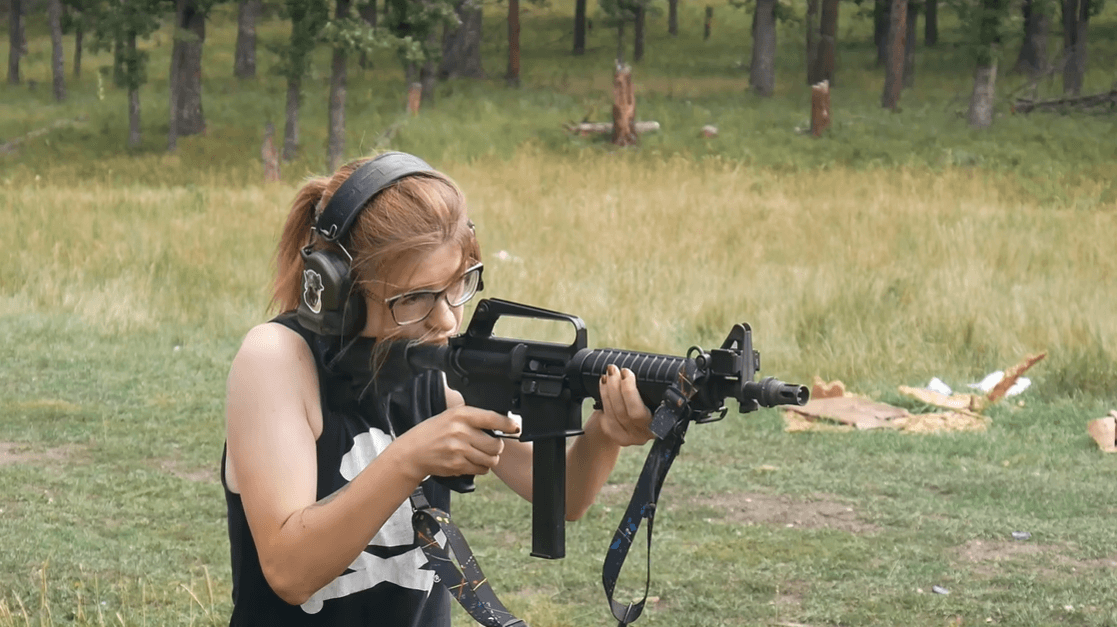
 Loads from YouTube only after you press play
L7A1 9mm proof-pressure ammo: cold and ambient chronograph test
Key points: L7A1 9mm proof-pressure ammo
- The L7A1 was made only from 1990 to 1992, a couple of million rounds total, and was pulled from service quickly once its pressure was judged unsafe; the ATF banned its import into the US in 1996, citing handgun use in particular.
- Measured behavior puts it in proof-ammunition territory — 9mm proof runs roughly 52,000 to 55,000 PSI, and this load reads at the top of that band or slightly past it, which is a pressure guns are meant to see once or twice in testing, not repeatedly.
- Pulldown data: a 124-grain NATO-standard projectile over about 7.38 to 7.4 grains of a flake propellant, with a visible sealant band inside the case mouth; projectile weights were extremely consistent, which points to consistent ballistics.
- The cold test inverted the usual expectation. Conditioned at about 25 degrees Fahrenheit for four and a half hours, the round sped up — roughly 1550 to 1570 fps from an H&R 635 carbine and 1310 to nearly 1370 fps from an RXM pistol — while 147-grain control ball held flat or drifted slightly slower.
- The favored explanation for cold-fast propellants is microstructure cracking at low temperature, which increases burning surface area and accelerates the burn; that behavior fits the load's stated purpose of reliability in adverse conditions.
- Counterfeits are the larger hazard: with a genuine run this small, copycat loads circulate widely, and an unknown propellant at unknown pressure is a worse bet than the already-hot original. The video deliberately withholds powder specifics.
- Five rounds through the RXM produced a stovepipe, the 635 ran clean over the same tiny sample, and Britain soon replaced the L7A1 with the L12A1 — near-identical performance held below 50,000 PSI, so the high-pressure original never saw real use.
About this Ballistics Focu video
L7A1 9mm high-pressure ammo on the chronograph: Boondock Ballistician tests the British submachine gun load Hirtenberger produced between 1990 and 1992, barred from US import by the ATF in 1996 over handgun safety. Pulled rounds give up a 124-grain NATO projectile over roughly 7.4 grains of flake propellant behind a sealant band. Conditioned to 25 degrees Fahrenheit, the load ran faster rather than slower: 1550 to 1570 fps from an H&R 635 carbine, 1310 to nearly 1370 fps from an RXM pistol, while control 147-grain ball stayed flat. Pressure lands at or past the 55,000 PSI proof ceiling.
Transcript: L7A1 9mm proof-pressure
Read the excerpt
The L7A1 ammo was only produced between the years of 1990 and 1992 with an extremely short-lived shelf life because, well, it quickly got classified as unsafe due to it being high pressure. Now, if this ammo was made nowadays, it would be an extremely sought-after hot commodity. Absolutely everyone and their sister wants it, but in 1996, the ATF did ban the import of this ammunition into the US […]
Full transcript on file — indexed for site search.